Towns near Icod de los Vinos, from Garachico and Teno to the Orotava valley and the hills: what each one offers, and which fit if you only have half a day.
Three directions lead out of Icod, and each gives you a different kind of town. West: Garachico, Los Silos and Buenavista del Norte, with Teno Alto and Masca beyond, in the Teno massif. East: San Juan de la Rambla, Los Realejos, La Orotava and Puerto de la Cruz, in the Orotava valley. Uphill: El Tanque, La Guancha and Santiago del Teide, in the midlands. This guide is the index: what sets each one apart and which to choose for the time you have.
If you have half a day
For a historic town by the sea: Garachico. It sits right next to Icod to the west and packs a lot into a small space.
For a grand old town centre: La Orotava, with its balconied houses and churches.
For something quiet with rock pools: Los Silos or San Juan de la Rambla.
For mountain scenery without much walking: drive up through El Tanque towards Santiago del Teide, stopping at viewpoints.
For Teno and Masca, allow a full day. Punta de Teno can only be reached by bus or taxi, and Masca has its own logistics.
Towards Teno: the west
Garachico
It was Tenerife's main trading port until the 1706 eruption wrecked it, and the town was rebuilt afterwards. It has been a listed Asset of Cultural Interest since 1994, and it has the Castillo de San Miguel and the El Caletón natural pools. If you can only do one, this is it.
A small, unhurried town around the Plaza de La Luz, with a late sixteenth-century church and the former San Sebastián convent, founded in 1649. The coast has rock pools and natural pools. If you walk, the PR-TF 53 passes the hamlet of Cuevas Negras and links the town with Erjos in 5.24 km, according to Tenerife ON.
The last town before the Teno massif. The centre turns around the square and the church of Los Remedios, which burned in 1996 and has been restored. The 369 bus leaves its station for Punta de Teno, the island's westernmost point, which you cannot reach by private car.
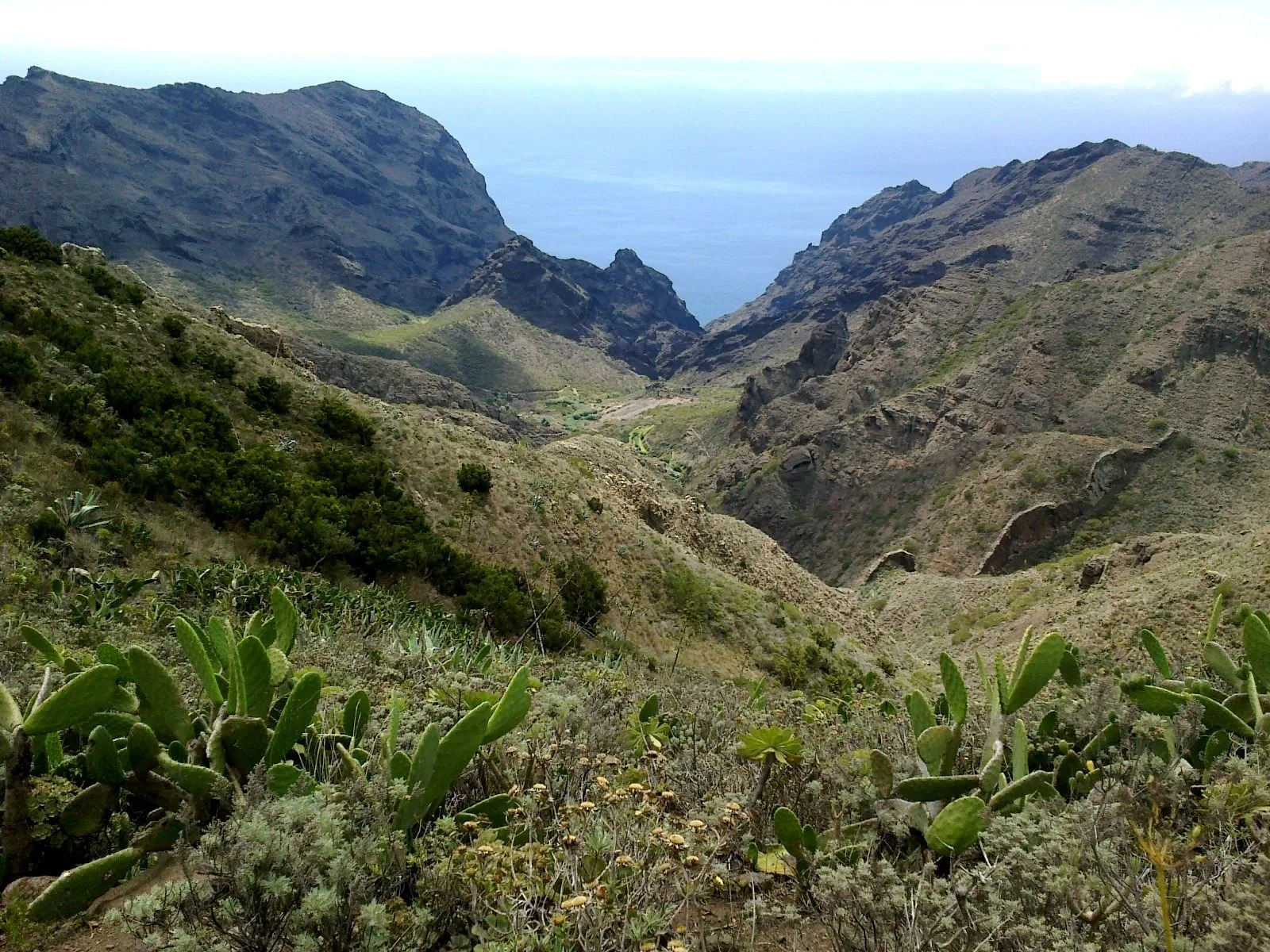
A hamlet high on the massif, within the municipality of Buenavista: traditional houses, a little square with its chapel, and terraces, fields and goat farms all around. It suits anyone after rural Tenerife away from the coast road.
Turismo de Tenerife calls it one of the finest examples of rural architecture on the island, and it has been declared an ethnographic area. Seeing the hamlet and walking down the ravine are two different plans; the access rules for each are in the Teno and Masca guide. TITSA bus 355 links Buenavista and Santiago del Teide via Masca.
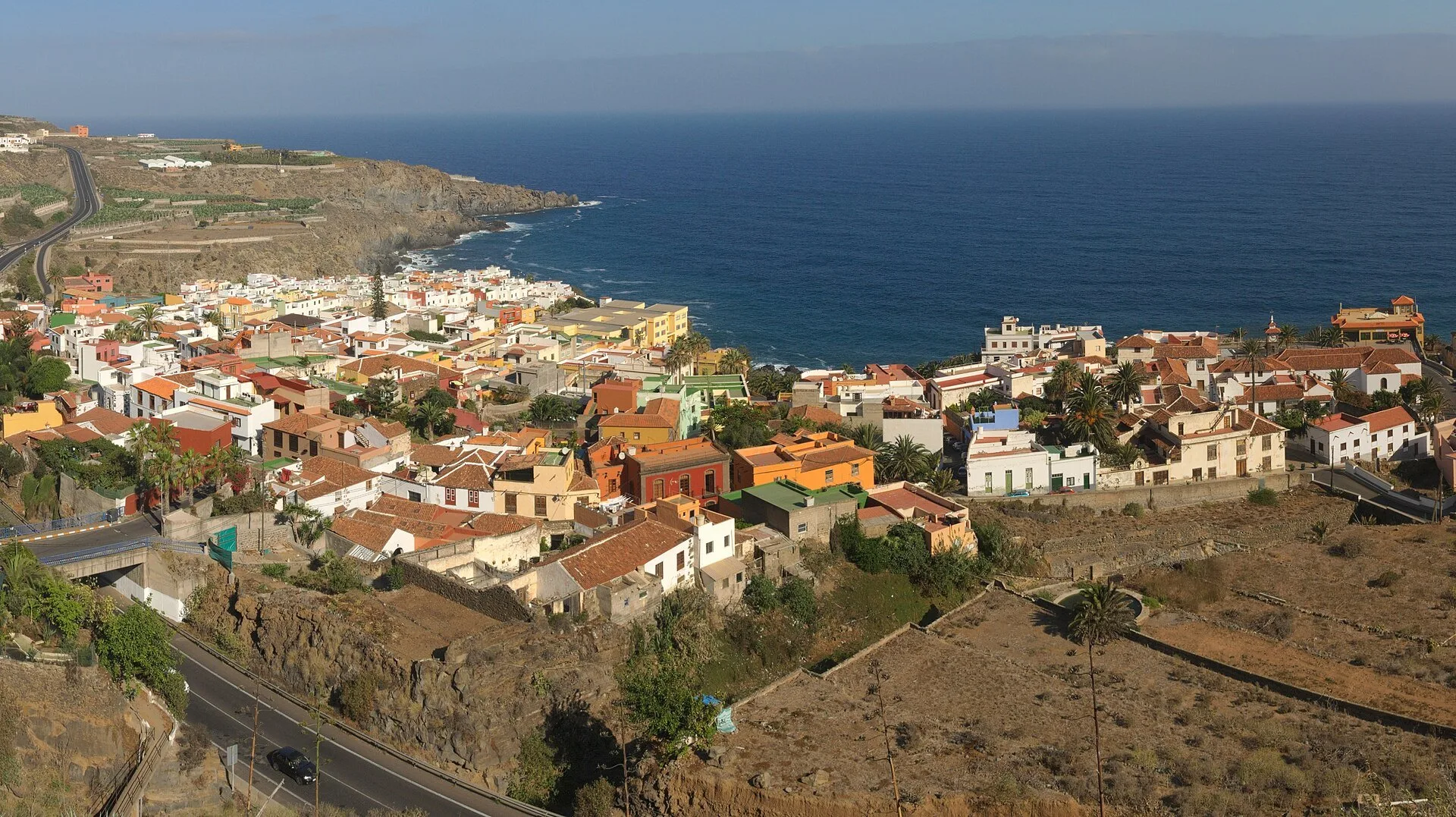
It keeps a centre of traditional architecture around the church of San Juan Bautista. Below, the coastal district of Las Aguas has natural pools and restaurants, and the Charco de La Laja, a lava basin filled with seawater, is one of its most photographed spots.
Its coast holds Rambla de Castro, 45 hectares of Canary palms and threatened plants, and El Socorro beach, known among surfers. In early May it holds the Cruces y Fuegos festival, with decorated streets and fireworks. On the road down from Icod el Alto is the El Lance viewpoint.
The old town, listed as a historic-artistic site in 1976, is the grandest in the north: the Casa de los Balcones and its pine-heartwood balconies, the church of La Concepción, which Turismo de Tenerife considers the finest Baroque building in the Canaries, and the Hijuela del Botánico gardens, from 1788. At Corpus Christi the streets are laid with carpets of flowers and volcanic sand.
Puerto de la Cruz
It was the first tourist destination in the Canaries. It is the most urban on the list: the old fishing quarter of La Ranilla, with its murals, the Lago Martiánez pool complex, Playa Jardín and the Botanical Garden, created by order of Carlos III in 1788. La Ranilla also has the Archaeology Museum, in case the day turns grey.
More than 60% of its land is protected, in natural areas ranging from 400 to 1,354 metres above sea level. Being in the midlands, it is usually cooler than the coast. The centre has traditional architecture, and there are viewpoints such as Lomo Alto and El Lagarito.
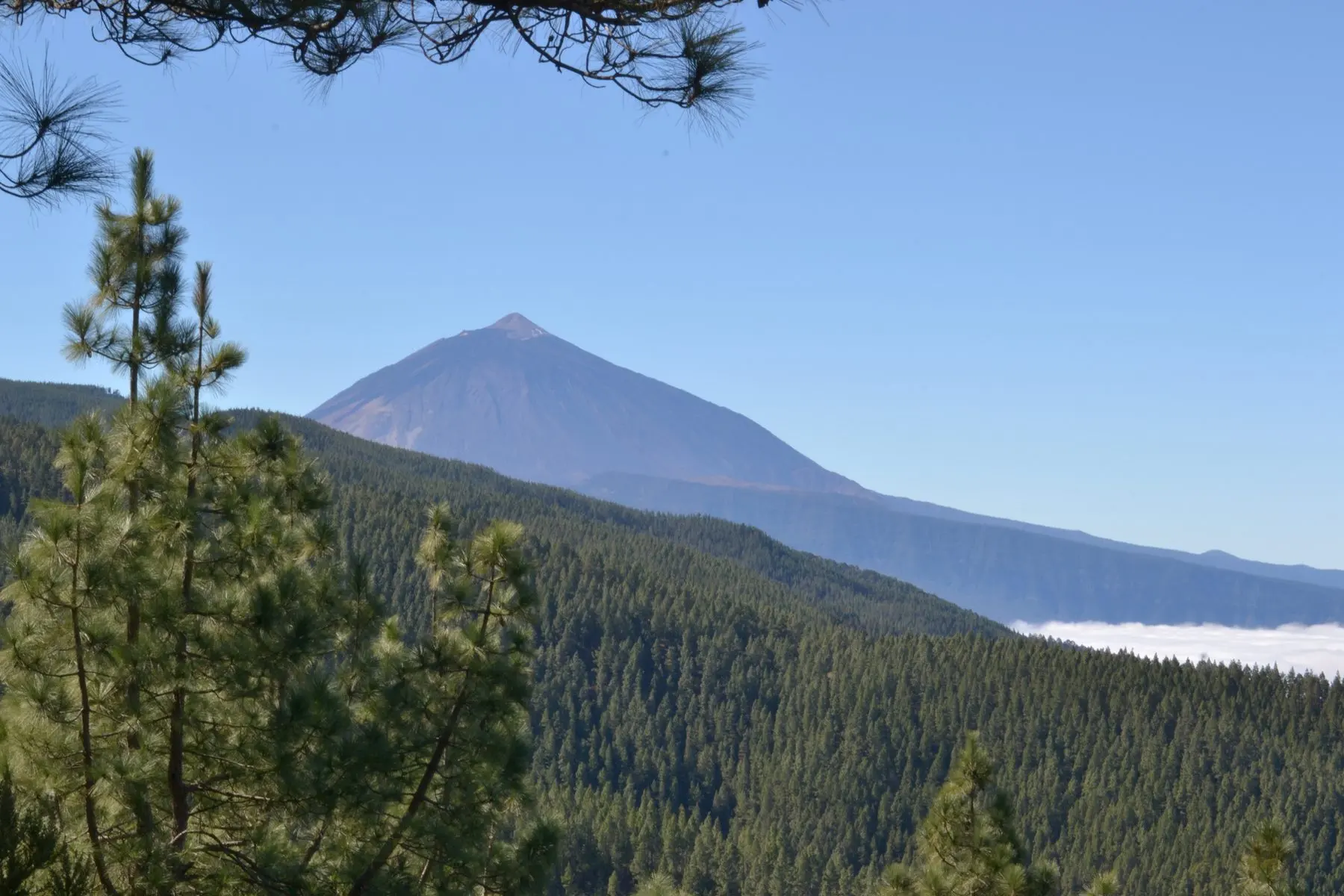
The municipality runs from the slopes of Teide down to the sea. Up top there is pine forest and the El Pinalete recreation area, with barbecues; the El Topete viewpoint looks out over Teide and the north. Down on its coast is the Charco del Viento.
The town centre sits at about 900 metres. In winter the almond blossom changes the landscape, and Arguayo has the Cha Domitila pottery centre. Within its boundaries are the Los Gigantes cliffs, up to 600 metres high, and the Chinyero reserve, the 1909 volcano.
By bus
Route 363
Puerto de la Cruz – San Juan de la Rambla – Icod – Garachico – Los Silos – Buenavista
Route 460
Icod – El Tanque – Santiago del Teide – Guía de Isora – Costa Adeje
Route 355
Buenavista – Las Portelas – Masca – Santiago del Teide
Route 369
Buenavista – Punta de Teno, €1 each way
Route 108
Icod – Los Realejos – La Orotava – La Laguna – Santa Cruz
From Finca Julia
Icod sits right in the middle, so none of these towns means moving base. A sensible way to split them: one morning for Garachico, another for La Orotava, a full day for Teno, and an afternoon in the hills for when cloud sits on the coast. Buses 363, 460 and 108 all run through Icod and cover nearly all of the above.
For a historic centre, Garachico and La Orotava. For scenery, Masca and Teno Alto. It depends whether you want streets or mountains.
Can you do Garachico and Masca in one day?
Yes, if you do Garachico in the morning and Masca afterwards, without walking the ravine. Check access to Masca first: it is covered in the Teno and Masca guide.
Do you need a car to get around these towns?
For the coastal towns and the valley, buses 363 and 108 work. For the hills, Teno Alto or several towns in a day, a car is far more practical.
Experiences and itineraries that share places with this page.
DayA day through the villages of the Isla Baja1 dayThe listed old quarters of Los Silos and Buenavista, El Tanque's 1728 church, a viewpoint over the Isla Baja, a rock pool and Garachico on the way back.
DayThe Orotava Valley, from the old town to the sea1 dayThe La Orotava old town, two free gardens, old Puerto de la Cruz, the Botanical Garden and the coast road home past the valley viewpoints. Half an hour from Icod.
PlanA morning of mystery in IcodA morning · 4–5 hA 27,000-year-old lava tube, a tree whose age nobody knows and the port the lava swallowed in 1706. For travellers who come looking for stories.
PlanA morning among dragon trees and stoneA morning · 4–5 hBreakfast in the old town, the dragon tree before the crowds, Icod on foot and Garachico for lunch. Four hours, six kilometres of driving.
We use Google Analytics to learn which pages are useful. If you decline, the site works exactly the same and no measurement cookie is stored. You can change your mind at any time from the cookie policy.