La Orotava · What to see
Casco histórico de La Orotava
A town founded in the early 16th century high in the valley, with cobbled streets, carved wooden balconies and manor houses, declared a historic-artistic ensemble in 1976. A first walk links the church of La Concepción, a landmark of Canarian baroque, the Liceo de Taoro and the church of San Agustín, then continues through the streets of Villa de Abajo; the Mills Route starts in Villa de Arriba and passes nine water mills. During the Corpus Christi octave the town hall square is covered by a huge carpet made of volcanic sand from Teide.
- 27 min · 24.7 kmFrom Icod old town
- Half a dayIt takes
- La OrotavaMunicipality
- No record that it is neededBooking
28.3906° N · 16.5234° O
Checked 2026-10-24· official source
01Practical details
- Declaration
- historic-artistic ensemble, Royal Decree 3302/1976 of 10 December
- Church of La Concepción
- National Historic Monument in 1948
- Mills Route
- nine water mills from the 17th and 18th centuries
- Corpus carpet
- sands from Teide National Park, up to 41 colours
- Suggested time
- 2 to 3 hours
see source 1 ↗see source 2 ↗see source 3 ↗see source 4 ↗see source 5 ↗see source 6 ↗see source 7 ↗
03Around
What you have nearby
Ordered by real distance between coordinates, not by our preference.
Jardines Victoria
Terraced gardens on Plaza de la Constitución that once belonged to the mansion of the Marquisate of La Quinta Roja. They rise to the marble mausoleum the marchioness commissioned from French architect Adolph Coquet for her son Diego, a freemason who died in 1880 and whom the bishopric would not allow to be buried in the family vault; completed in 1883, it was never used. The top terrace looks over the whole town, from the sea to Mount Teide. Free entry.
Iglesia de Nuestra Señora de la Concepción
La Orotava's mother church, the third built on the site: work began in 1768, after the 1704-1705 earthquakes ruined its predecessor, and it opened in 1788. Its baroque crested façade, twin towers and drum-mounted dome make it unmistakable in the old town; inside are three naves and a marble and jasper tabernacle by Giuseppe Gaggini (1823). It has been a National Monument since 1948 and houses a sacred art museum.
Hijuela del Jardín Botánico
Behind La Orotava town hall, on what was a Poor Clares convent's orchard, the Puerto de la Cruz Botanical Garden set up a nursery in the late 19th century. Today it is a small fenced garden with unusual exotic trees and a dragon tree. Entry is free.
Museo de Artesanía Iberoamericana de Tenerife (MAIT)
A Cabildo-run museum in the former Dominican convent of San Benito Abad, founded around 1592; it keeps its cloister, timber ceilings, stone staircase and entrance arch. It opened as a museum in 1991 and spreads Ibero-American crafts across ten rooms, with special attention to the Canary Islands: folk art from the Americas and the Philippines, traditional musical instruments and Spanish pottery. Entry is free.
Plans
Plans that pass through here
Experiences and itineraries that share places with this page.
- DayThe Orotava Valley, from the old town to the seaThe La Orotava old town, two free gardens, old Puerto de la Cruz, the Botanical Garden and the coast road home past the valley viewpoints. Half an hour from Icod.
- PlanGarachico at duskThe town once the coaches leave: a walk through the listed old quarter, the seafront with the pools below, and dinner at one of its twenty-nine restaurants.
- PlanA glass of wine before heading backA winery of the Ycoden-Daute-Isora DO with a booked visit, the wine museum on Plaza de la Pila and dinner in the old town. Wine afternoon, ten minutes away.
- PlanA slow-breakfast morningThe only breakfast in the district with published hours, Garachico's farmers' market on a Sunday, and back to the house with the shopping. No hurry.
Official sourceChecked on Next check
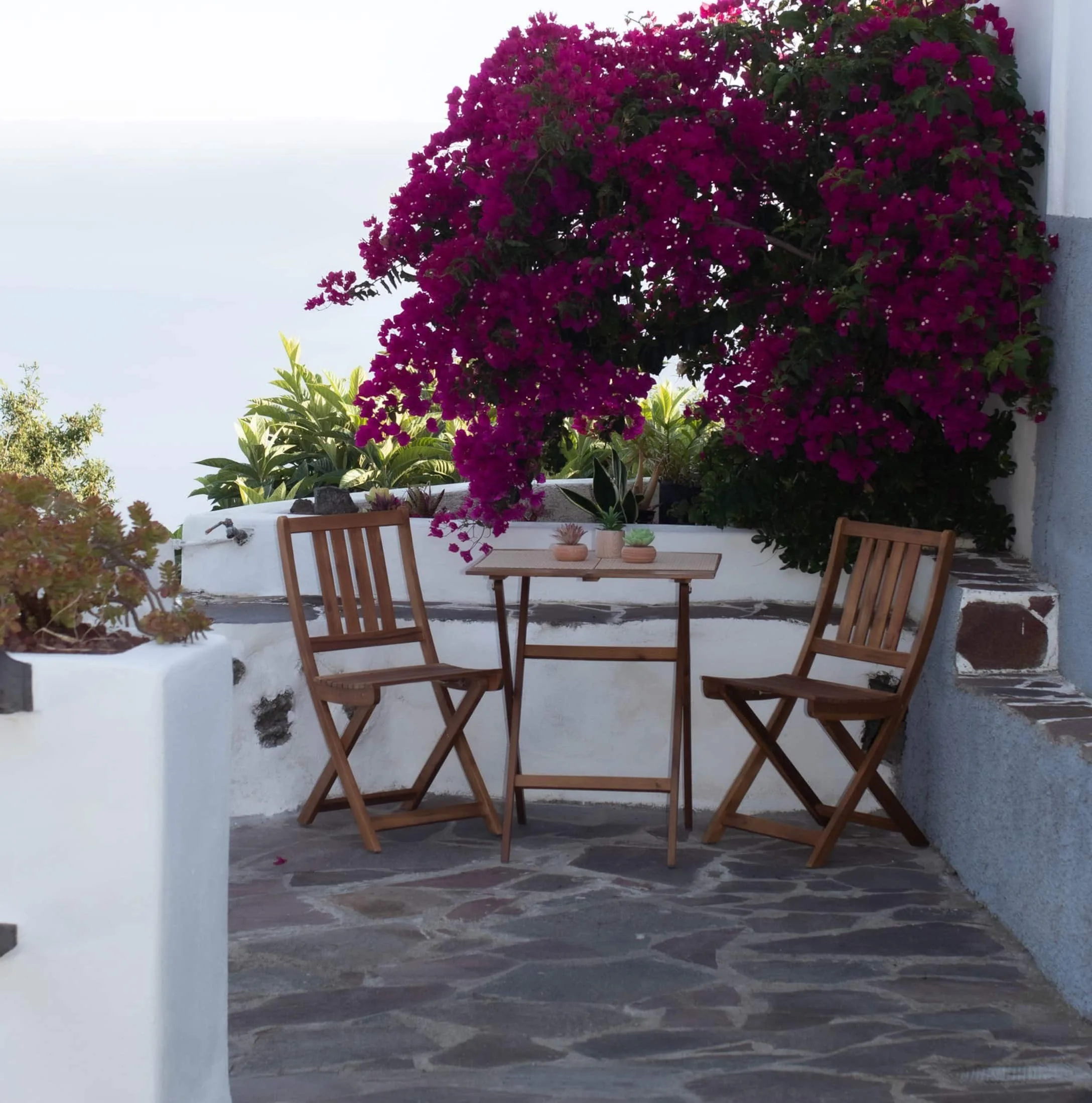
Finca Julia · Icod de los Vinos
And at the end of the day,
the terrace.
An old Canarian house on the hillside, with the Atlantic in front. Availability and price are on the official Airbnb listing.